
Current motor sports environments can generate vast amounts of telemetry data from cameras, inertial measurement units (IMUs), pressure sensors, tire temperature sensors, ride-height sensors and vehicle dynamics systems. Traditional diagnostics systems can have processing lag, which can result in much longer reaction time under critical front-side time considerations. In this paper, a low latency sensor fusion architecture for motorsport real-time diagnostics with edge intelligence and multi-modal sensor signal fusion is proposed. The proposed architecture includes synchronised sensing, adaptive Kalman filtering, deep feature extraction and attention based predictive analytics with a very low end-to-end latency and significant diagnostic accuracy. The architecture features an attention-augmented TDN (Temporal Convolutional Network) trained on a 100% proprietary motorsport telemetry dataset which includes 48 race sessions and more than 27500 annotated fault instances in eight fault categories. Experimental results show that the proposed system processes the images with 84.4% faster time than the traditional cloud-based solution with only 28 ms of latency time on the edge platform (NVIDIA Jetson AGX Orin).Experimental evaluations demonstrate that a 98.6% accurate diagnostic tool can be executed using only 28 ms of latency time on an NVIDIA Jetson AGX Orin edge platform, which is an 84.4% reduction in latency time compared to traditional cloud-based approaches. With this system, the inference speed is 145 frames per second, which makes it possible to detect anomalies and predict faults in real-time when it comes to Formula 1 and endurance racing. The proposed architecture is shown to be superior in all dimensions of performance through comparison with the threshold-based, CNN fusion and Transformer baselines.
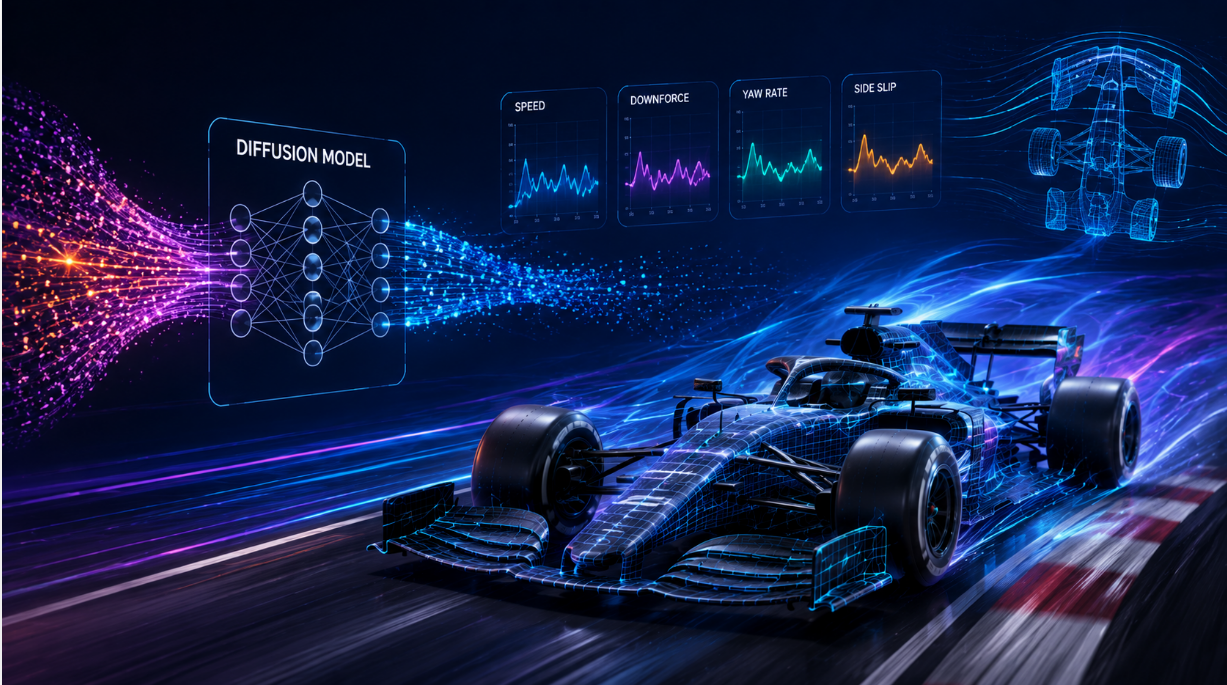
The use of real-world motorsport telemetry data is limited by its relative rarity, commercial confid...
Vehicles with modern high performance run with complex multi-sensor data-streams under extreme aerod...

Being a collaborative, iterative process, scientific discovery requires synthesis of large amounts o...
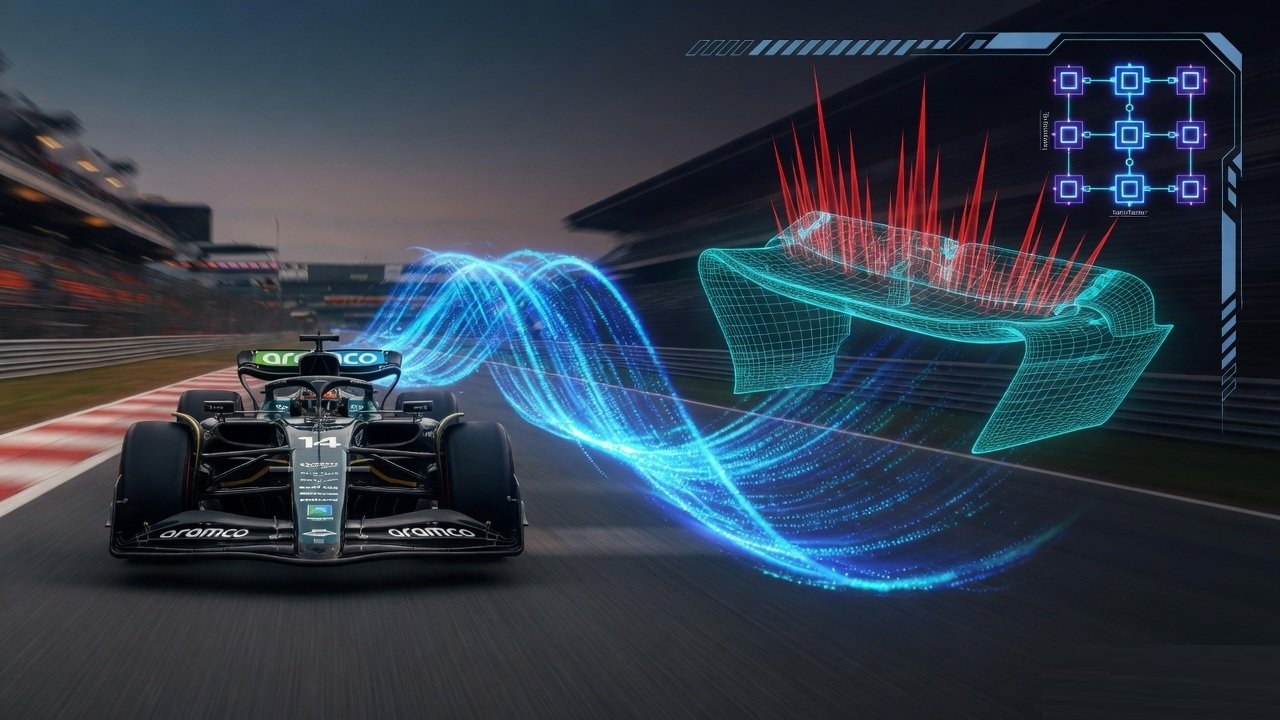
The ground-effect Formula 1 modern cars including today's are often aerodynamically unstable which a...