
The study of emotion recognition via EEG is important due to the role emotion plays in decision making, behaviour, mental health, human computer interaction and understanding of emotion from an EEG perspective. Traditional machine learning methods use hand-crafted features and previously have not been able to cope with non-linear brain cell activity patterns. While the deep learning architectures excel at building representations, the data and compute power needed are often large. In this paper, a quantum kernel learning (QKL) approach for emotions recognition using EEG data is suggested. The framework combines both the spectral preprocessing and the covariance-based representations on the symmetric positive definite (SPD) Riemannian manifold and tangent space embedding and quantum support vector learning. The signals from EEG are mapped into a structured covariance representation that is able to maintain inter-channel statistical structures. The filters in quantum feature maps are parameterized quantum circuits that lift classical EEG representations to exponentially larger Hilbert spaces, and thus offer a more powerfully discriminative kernel where classical EEG cannot compete. The QSVM dual optimization problem is tackled in a classical manner with the quantum kernel Gram matrix. A 32 channel 40 subject benchmark is used for the experimental analysis with 97.5% classification accuracy and higher robustness against the degradation of the signals when compared to the state of the art SVM, CNN-SVM, and CNN-QSVM baseline methods on all of the evaluation metrics.

One of the key architectural challenges is the inability of current transformer-based models to reta...
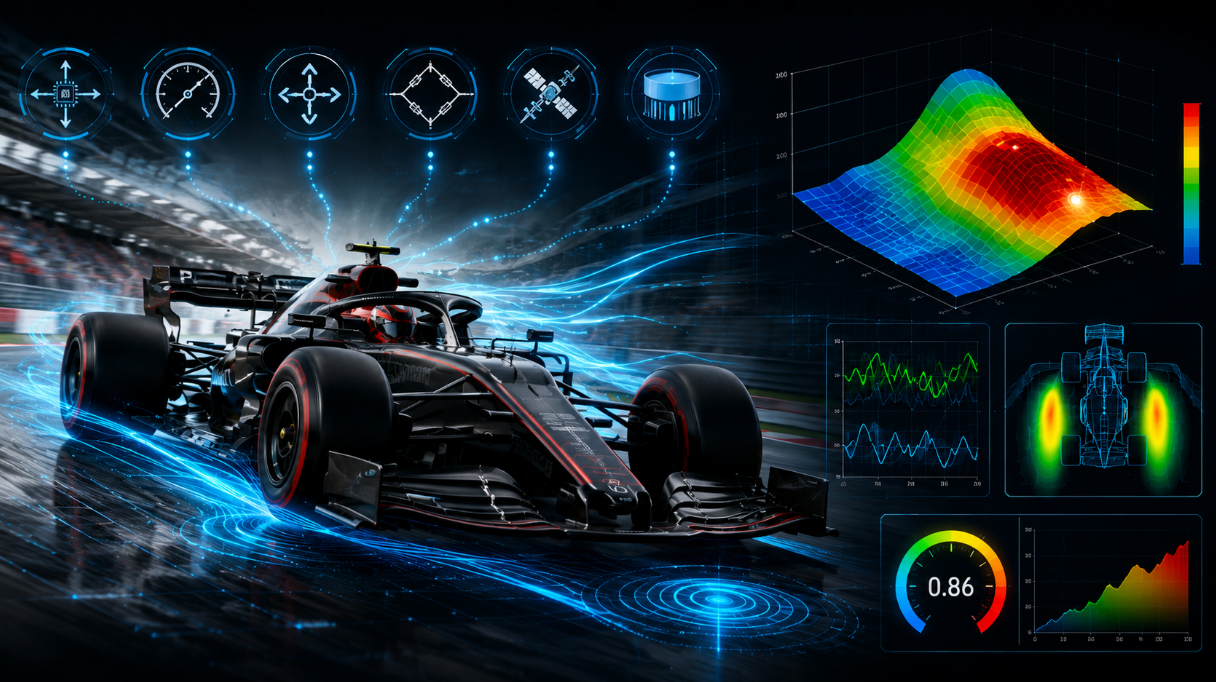
New problems have been created in ‘aero-elastic stability' in modern Formula 1 ground-effect aerod...
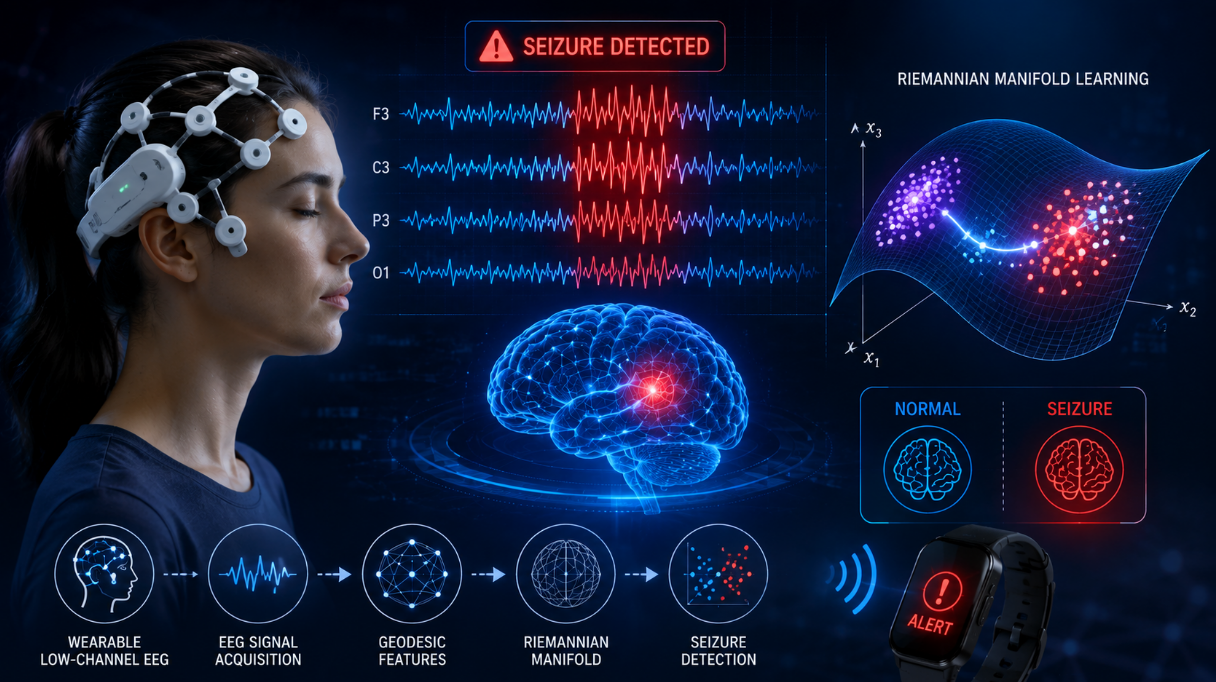
Reliable seizure detection in wearable electroencephalography (EEG) systems requires both high class...
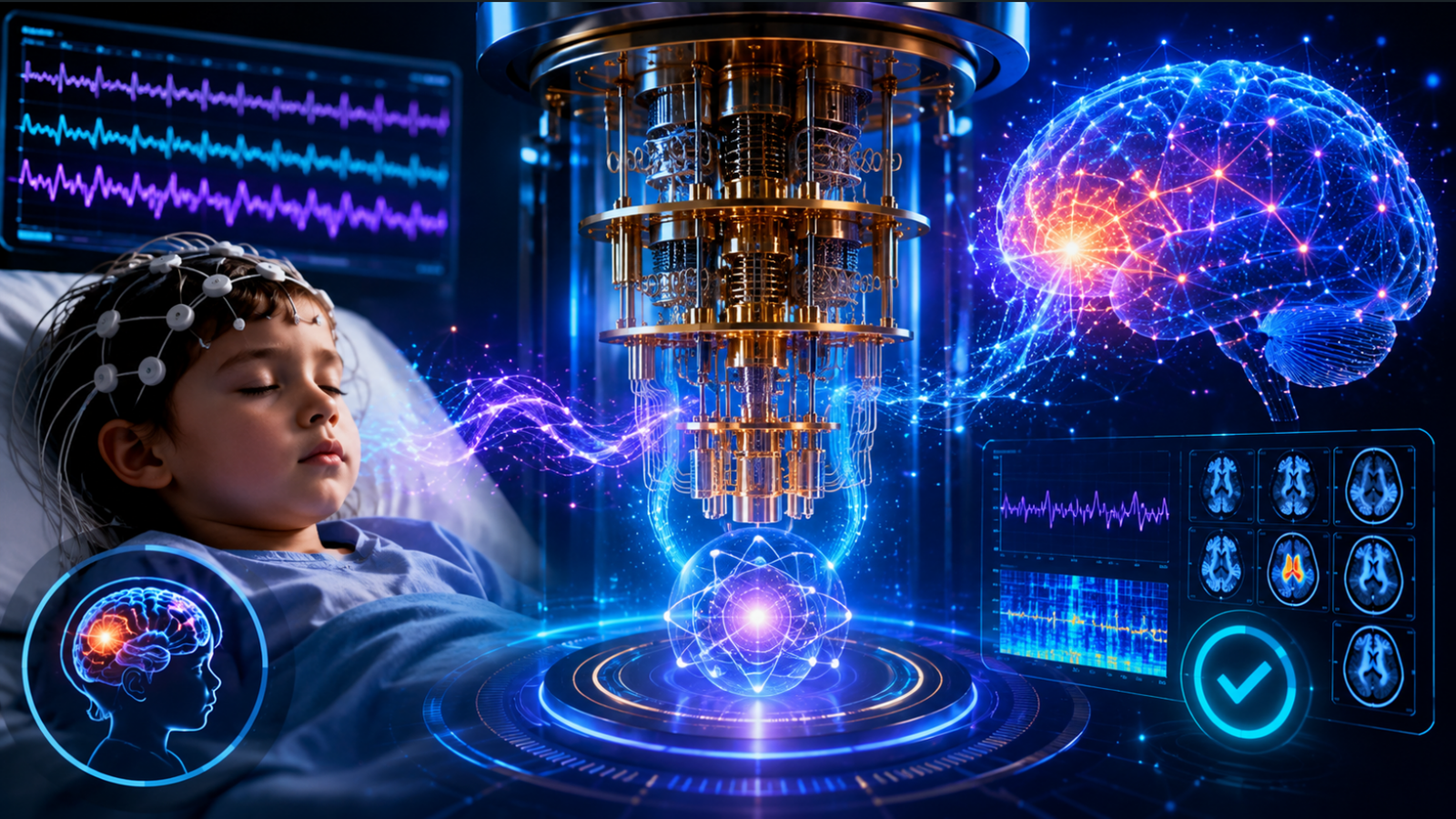
Epilepsy is a common neural disease among the children and in such cases, early and proper diagnosis...